What is storytelling?
Storytelling isn’t a magic word — it’s selection, structure, and the images we leave behind. A look at what a story actually is, from Hemingway to PowerPoint.
We hear a lot about storytelling — that it’s what everything comes down to. Storytelling, the secret ingredient, as a buzzword. We have to tell the story, we have to engage, that’s the key, that’s where the human shows up. But what does it actually mean? What is storytelling, really?
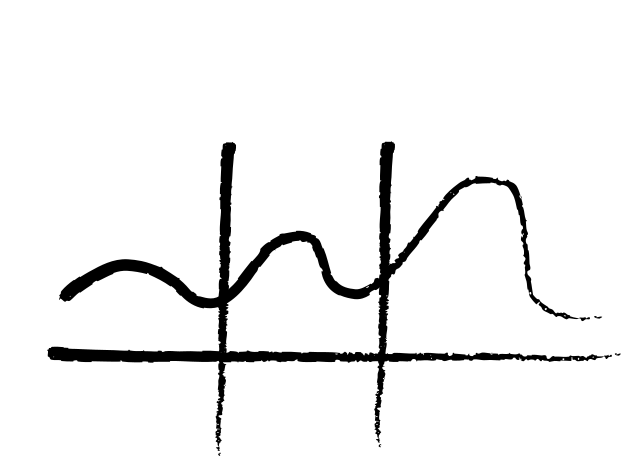
Technically, a story is something with a beginning, a middle and an end. It’s something that develops — something with a past, a present and a future. A cup of coffee isn’t a story, but why is there a cup of coffee here, where did it come from, who did it belong to, and what’s going to happen to it next? That’s material for a story.
“For sale. Baby shoes. Never worn.” Ernest Hemingway’s shortest story. The words themselves don’t spell out beginning, middle and end, but they hint at a backstory with the simple image they put forward. It’s we who, with our thoughts and our mental pictures, make room for a story to emerge from just those few words.
I think about storytelling in PowerPoint slides, in presentations and in meetings — anywhere you meet people. Where do we start? What’s the point? What do we want people to walk away with?
Storytelling is a strategic move. It’s about selection. Storytelling isn’t about saying everything — it’s about prioritising what you say to achieve a deliberate effect. Saying everything creates information overload; saying carefully chosen details that build images in the listener’s mind, with a deliberate structure — that’s storytelling.
Another three-part frame for telling a story is: and — but — therefore. You describe an ordinary situation, you describe a problem, you describe a solution, and because of that problem something changes — something that wouldn’t have happened if this event and this problem hadn’t occurred — an effect triggered by conflict. That’s a story.